The Status Survey and Conservation Action Plan for Hyaenidae from 1998 stipulates some actions that still need to be addressed. Among these are actions to improve the public perception of hyaenas and to promote hyaenas as tourist attractions in order to increase their value.
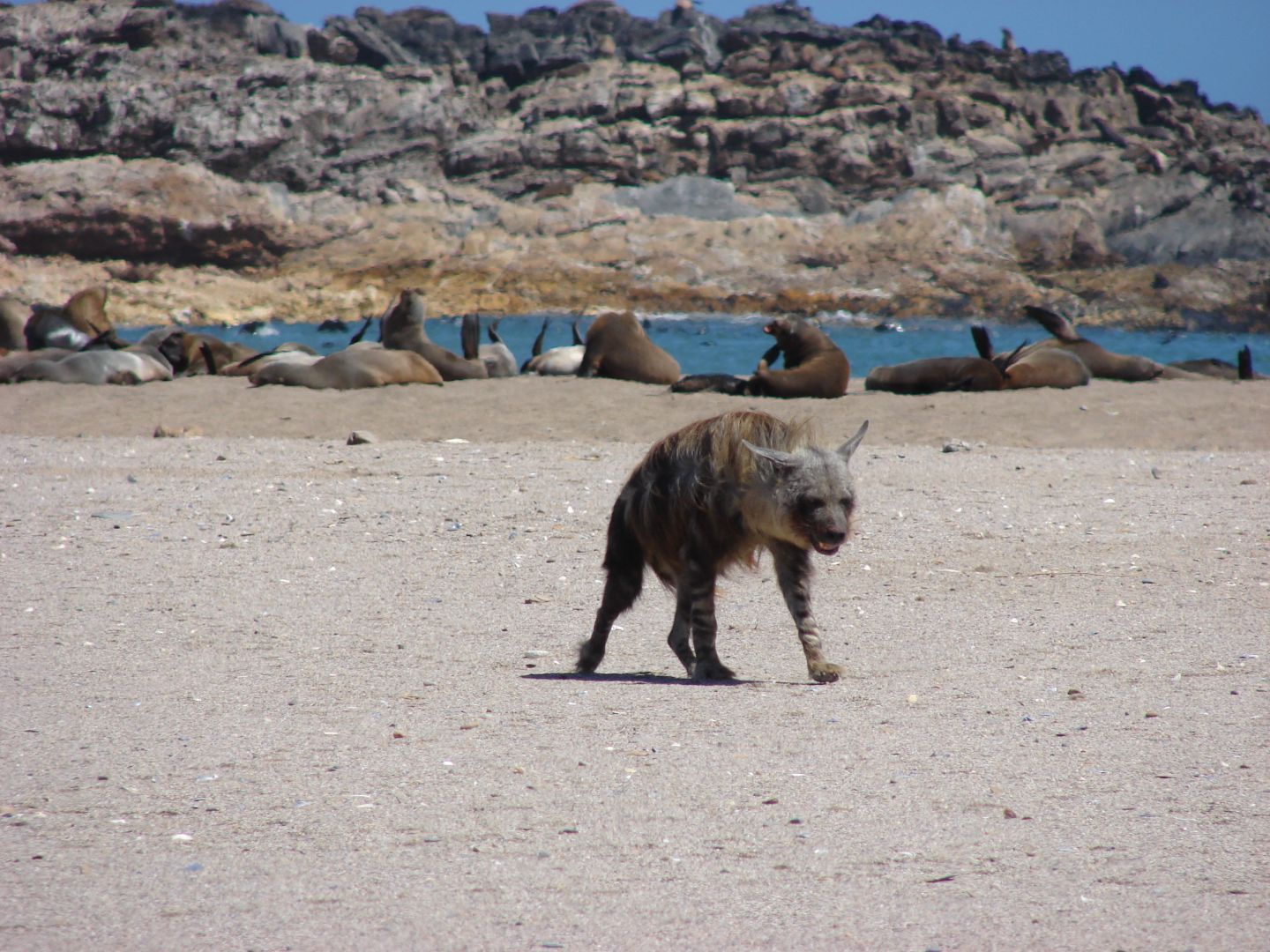
Recently, a Tourism Development Plan was developed for the Tsau//Khaeb National Park in south-west Namibia. The Park is part of the Succulent Karoo Biome, an internationally recognized biodiversity hotspot, and one of the Park’s flagship species is the brown hyaena. The Plan includes the establishment of tourism activities at a mainland Cape fur seal breeding colony. This colony forms the major food source for resident black-backed jackals and brown hyaenas.
Our previous studies have shown that resident hyaena clans’ home ranges overlap in the area around the colony and that also members of at least two inland clans visit the colony to forage. There are indications of temporal partitioning among resident clans and the tourism access route would be located in an area that forms part of a corridor used by visiting inland animals. The high density and all-day activity of carnivores at the colony provides a unique opportunity to promote hyaenas as a tourist attraction.
This project aims to collect baseline data to develop a tourism program with minimal impact on the target species, to assist the government with its implementation and to monitor hyaena behavior to ensure long-term sustainability.